Showing posts with label elaine cohen. Show all posts

Thursday, August 18, 2016

Beyond Reports - 11 insights

The GRI Conference has come and gone, and I have been so busy working on so many client reports that I have barely come up for air, let alone come up to post on the blog. More about some of the reports I have been working on in recent and upcoming posts.

Lots of water under the bridge since the GRI Conference in May 2016... including the not-so-surprising-to-many-of-us departure of Michael Meehan, the GRI CEO since 2014. A new era of collaboration and innovation will now be replaced with a new era of searching for a new CEO. The hunt is on... though, as is often the case, organizations look further than they need to.

Someone  I believe is eminently qualified to lead GRI into a new era of better and more impactful reporting is GRI's current Deputy Executive, Teresa Fogelberg. Teresa has been a reporting advocate for longer than most of us have been reporting, and has advanced the positioning of reporting around the world through her work with governments and advocacy organizations more than anyone else on the landscape. As a veteran GRIer, she's well positioned to put GRI back on course. Continuity at GRI is critical in this period to avoid onging over-commercialization of the GRI services and focus on advancing the true value of reporting as a process, an output and an impact on the way business gets done and the way economies are run. Just as we might hope for the USA in the forthcoming elections,  a woman (the right woman) at the helm of GRI will be a new era of not only collaboration and innovation, but also, getting things done.

But I digress.

This post is about podcasts. You may or may not have noticed, but GRI has been putting out a series of short podcast called Beyond Reports for some time now. In fact, there are 6 in the series to date. The podcasts include a brief update of reporting news over the past month, and an interview with a reporting personality from the GRI network.


It was fun for me to be one of the six podcasters so far. At the GRI Conference, GRI's charming Media Relations Manager Davion Ford asked me lots of questions about my favorite subject: reporting. and this was the result:


Five insights:
"A challenge that is significant for companies is about reporting impacts and outcomes rather than a whole shopping list of everything they have ever done. A report is not an activity agenda - it should be a focused material account of how companies are making a difference in our lives. Companies find it difficult to report how they are making a difference rather than simply what they did."

"The biggest thing that companies have a challenge with is: bad news. No-on wants to put bad news in a Sustainability Report. I always advise my clients to include good-bad news, which means that you should disclose a challenge or particular difficulty, but you can position that in a good way by describing what to have done to address that challenge or prevent recurrence of a problem."

"Legislation is always a great motivator but often it motivates to the minimum common denominator.....two drivers that will change the motivation of companies to report are large companies and CEOs. Large companies - the biggest multinationals - are more or less getting it. If they are able to drive reporting through their supply chain, that's a real motivator for their suppliers. The second thing is, if you want to motivate a business, convince the CEO. If the CEO is convinced that reporting adds value to the business, she will make it happen!"

"Your first sustainability report is not the absolute best report you could ever produce. It will take several years of perfecting your process in order to get a better quality report."

"A limitation of reporting today is that there tends to be bits of information presented in a fragmented way, which doesn't necessarily reflect a consistency of approach year on year. If I am reviewing the report of a company, for example, I always look at one or more prior reports. You can't take a single report in isolation. Our expectation is that we can read a report, and that's it. The big challenge is for companies is to develop consistency over time in reporting."


The first podcast in the series was with Nikki McKean Wood who heads up Corporate and Stakeholder Relations at GRI. Nikki talked about the new GRI GOLD community.

Three insights:
"The GOLD community members are really our core supporters so we strive to put them at the heart of GRIs network, shaping the future of sustainability reporting."

"We hope to achieve an active, engaged and diverse [GOLD] community."

"This is a new era of sustainability... we see business taking action towards a more sustainable world, but there's a lot to do and a transformational effort is required by all to unlock the real value of sustainability data."     

The most recent podcast in the series is an interview with Christina Burmeister of Deutsche Bank:


Three insights:
"The reporting process is relevant as much for management decisions as it is for investors."

"The Financial Services Sector has experienced a major shift in the last decade.. sustainability is becoming more and more of a strategic imperative."

"One can always improve the quality of reporting and the fact that a defined set of information will be mandatory [from the EU CSR Directive]  in the near future onwards will help that case.. there are sill some challenges ahead of us and we will take this opportunity to strengthen our internal process and get the adequate information."


I encourage you to have a listen to the Beyond Reports Podcast series of GRI  and pick up loads more insights from people who live and breath Sustainability Reporting every day. Of course, listening to podcasts with ice cream helps our brain understand all those wonderful insights.


elaine cohen, CSR consultant, Sustainability Reporter, HR Professional, Ice Cream Addict. Author of Understanding G4: the Concise Guide to Next Generation Sustainability Reporting AND Sustainability Reporting for SMEs: Competitive Advantage Through Transparency AND CSR for HR: A necessary partnership for advancing responsible business practices . Contact me via Twitter (@elainecohen) or via my business website www.b-yond.biz (Beyond Business Ltd, an inspired CSR consulting and Sustainability Reporting firm). Need help writing your first / next Sustainability Report? Contact elaine: info@b-yond.biz

Tuesday, December 2, 2014

4 reporting tips from Dr. Sustainability

Dr. Sustainability has made a short (3 minute) video all about sustainability reporting.


Dr. Sustainability, as you may know, is a regular guest expert on the CSR Reporting Blog. This time, she agreed to share some reporting tips and help a reporting geek (me) and Beyond Business (my company) spread our message about creating great Sustainability Reports. This is part of our preparation for our brand new Beyond Business website which is in the final stages of preparation. For the time being, I am happy to share our short, fun, reportingy geeky vid.

The video was created by Alexandre (Alex) Magnin and narrated by Juno Rinaldi. Alex is a skilled illustrator with a passion for sustainability. You can see more of his work and a range of fun-educational sustainability videos on the Sustainability Illustrated site.  

Check out our new vid:


elaine cohen, CSR consultant, Sustainability Reporter, HR Professional, Ice Cream Addict. Author of Understanding G4: the Concise guide to Next Generation Sustainability Reporting  AND  Sustainability Reporting for SMEs: Competitive Advantage Through Transparency AND CSR for HR: A necessary partnership for advancing responsible business practices . Contact me via Twitter (@elainecohen)  or via my business website www.b-yond.biz   (Beyond Business Ltd, an inspired CSR consulting and Sustainability Reporting firm).  Check out our G4 Report Expert Analysis Service - for published G4 reports or pre-publication - write to Elaine at info@b-yond.biz to help make your G4 reporting  even better. 

Monday, October 27, 2014

Reporting Matters.. more

Last year, the WBCSD (World Council for Sustainable Business Development), headed by the fearless Peter Bakker, published a review of sustainability reporting called Reporting Matters. I didn't get to blog about it at the time (I wish I could do nothing but blog) but I have taken it up again in the run-up to the invitation-only WBCSD Council Meeting in a couple of weeks in Atlanta, where I will be speaking and moderating in some sessions. The Atlanta meeting is themed: "Business - Setting the Pace". At this meeting, with the belief that business is a driving force for delivering sustainable solutions to the world’s most pressing challenges, senior executives of WBCSD member companies come together to explore opportunities to advance WBCSD's Action2020 strategy. The Council Meeting draws CEOs, Council Members and thought leaders from across all sectors and geographies in a high-level game-changing outcome-oriented week of debates and decisions. 


For those not familiar with WBCSD, it is an organization with a powerful voice in our sustainability landscape and a leading authority on natural and social capital risk management, disclosure and valuation. I include a brief blurb from the WBCSD website. 


"The WBCSD is a CEO-led organization of forward-thinking companies that galvanizes the global business community to create a sustainable future for business, society and the environment. From its starting point in 1992 to the present day, the Council has created respected thought leadership on business and sustainability. The Council plays the leading advocacy role for business. Leveraging strong relationships with stakeholders, it helps drive debate and policy change in favor of sustainable development solutions. The Council provides a forum for its 200 member companies - who represent all business sectors, all continents and combined revenue of over $US 7 trillion - to share best practices on sustainable development issues and to develop innovative tools that change the status quo. The Council also benefits from a network of 60 national and regional business councils and partner organizations, a majority of which are based in developing countries. By thinking ahead, advocating for progress and delivering results, the WBCSD both increases the impact of our members’ individual actions and catalyzes collective action that can change the future of our society for the better." 

Now you know. Check out the website. It's a wealth of resources. 

Anyway, back to the matter in hand and that's Reporting Matters. (Matter, matters. Good, right ?)


WBCSD produced this report in partnership with communications consultancy Radley Yeldar as a tool to help improve the effectiveness of reporting. Member companies can use the WBCSD analysis of their reporting to help improve different aspects of their own disclosure. Reporting Matters 2013 the baseline report and the research is ongoing with reports planned to be published annually. In early November, in Atlanta, the new Reporting Matters 2014 will be presented to give an updated view of data and trends in reporting effectiveness.

Peter Bakker introduced the 2013 baseline report with the words (among others): "We believe that reporting practices need to change to ensure that businesses are truly valued on what is important, that stakeholders have timely information, and that reports are read and used by investors and other stakeholders."

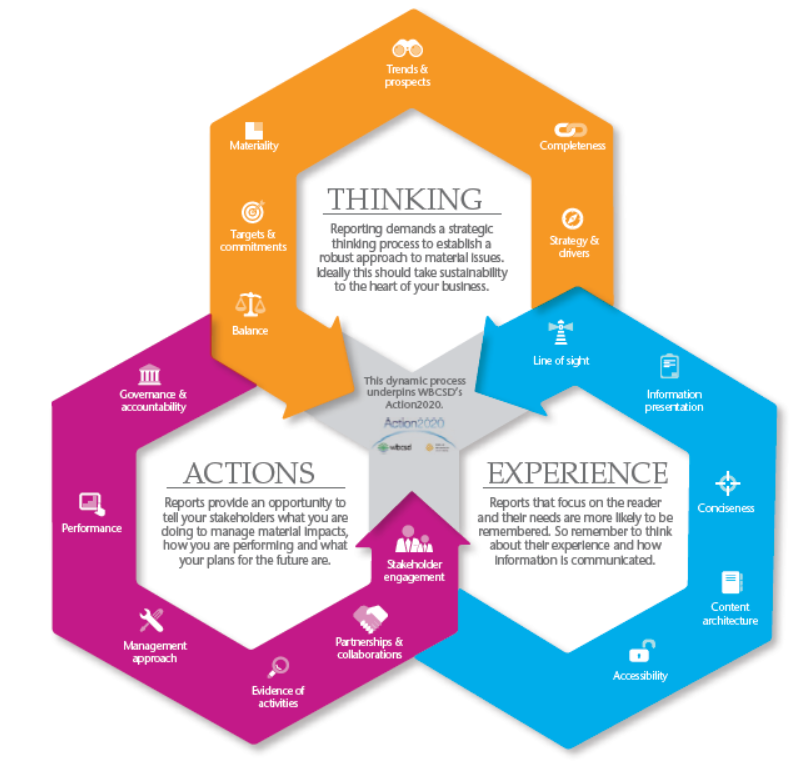
Reporting Matters measures the effectiveness of  corporate sustainability reporting and to do so, it defines an effectiveness framework based on three key elements: The Thinking that defines the report, the Actions (relating to material impacts) that the report discloses and the Experience that the reader has when reading the report.


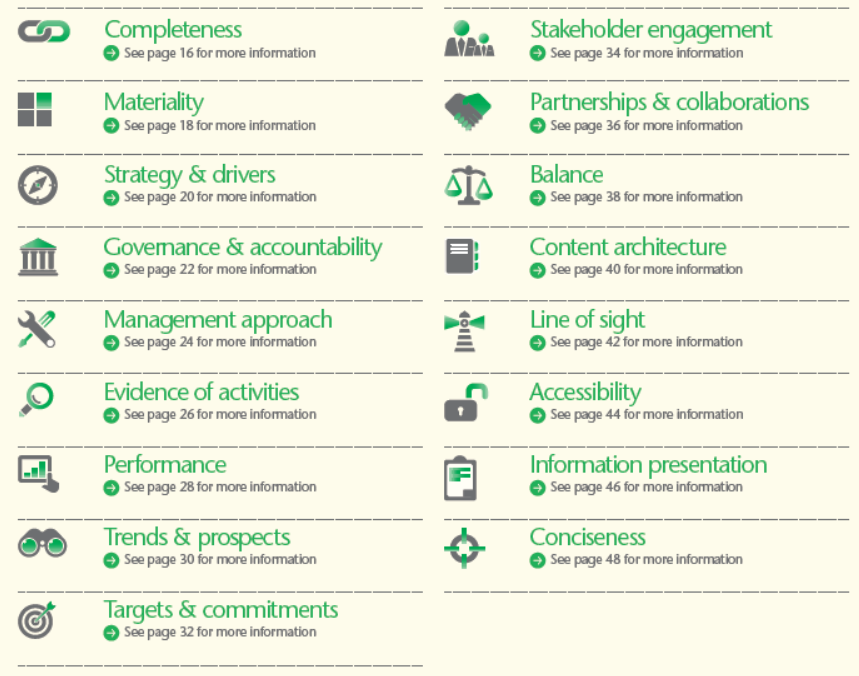
The Reporting Matters baseline examined 175 Sustainability Reports (including integrated reports) of WBSCD member companies across 20 sectors and 30 countries against 17 criteria (12 content-related and 5 experience-related).


For each of these criteria, Reporting Matters explains the approach, provides key findings from the research, offers recommendations and showcases best practice distilled from the 175 reports analyzed. Some of the overarching conclusions were:
  • Companies are reporting far more than a focus on material impacts might suggest. This makes for long, unwieldy reports and difficulty in finding the most relevant and useful information.
  • When combined with the annual report, the amount of sustainability content disclosed is generally less than a standalone report.
  • 75% of the reports analyzed follow GRI Guidelines and these tended to be the ones with the higher effectiveness scores.
  • 80% of the 175 reports analyzed were standalone sustainability reports. However, self-declared integrated reports scored higher on the WBCSD effectiveness scale than many standalones. 
  • 60% of companies have some form of external assurance at some level on some part of the report but only 4 companies (2%) used reasonable assurance for their entire report. 
But the real meaty stuff of this report is in the detailed analysis of the report against the stated criteria. Unfortunately, WBCSD does not share with us, the general professional public, the exact scores that each report received (though WBCSD member companies each receive their own scores and have the opportunity to discuss and review with WBCSD Reporting Matters experts). However, Reporting Matters shares enough for us to get the benefit of the learning and appreciate some great examples of reporting practice. Some examples follow.

Strategy and Drivers: Reporting Matters says: "A sustainability strategy is a clearly-articulated approach or plan to address material financial, environmental, social and governance risks and opportunities. It should link to a vision, a mission and provide an explanation of how the strategy will be delivered, including milestones and targets."

This made me stop and think, and agree, as more and more, I find that I read sustainability reports with a need to understand the strategic relevance and embedded approach that companies have adopted. In the early days of reporting, it was all about taking action in addition to doing your business. Reports were all about "we did this" and "we did that", where "this" and "that" referred to a volunteering activity, a charitable donation, a training event for employees or a LED lighting retrofit. No connection to an overall approach, strategic direction or business relevance other than the platitudes of "giving back", "doing the right thing" and "valuing our planet". Today, it's about being accountable for impacts across the value chain and through the core business. Today, if sustainability is not part of your business strategy, then your business strategy is not part of your future success. In any sustainable business strategy there is value, and that value should be clear as we read a company's sustainability report. Reporting Matters found that:
  • The most effective reporters disclose a business strategy that links to positive sustainability outcomes, such as the management or avoidance of sustainability risks or the development of opportunities through innovation. The strategy is supported by a detailed implementation plan. 
  • The most effective reporters define a specific business case for sustainability, referencing drivers such as cost savings, reputational benefits, and employee retention, as well as wider societal needs. 
  • Many reporters however do not establish a clear link between sustainability and their core business nor do they define a company-specific business case. 
  • Many reports do not include a sustainability vision and consequently do not communicate a clear sense of direction or purpose.
One of the three showcased examples includes Svenska Cellulosa:

Svenska Cellulosa is  a global hygiene and forest products company with around 44,000 employees that develops and produces sustainable personal care, tissue and forest products. The current Svenska Report for 2013 supports the insights noted by Reporting Matters about the prior report. Often, you can tell how much sustainability is embedded in a company's strategy simply by looking at what the company chooses to highlight. In 2013, Svenska highlighted real business developments that have sustainable value. 


While Svenska links its activities to business drivers and reports the results of activities, there is room to go further by reporting more outcomes and linking these outcomes to the business, as well as social and environmental value created. 

Evidence of Activities: Reporting Matters says: "Evidence of activities involves reporting on sustainability activities such as strategic programs and initiatives that occur during the reporting year, or progress of existing sustainability activities. It helps link management approaches to actions and performance and can substantiate statements and claims."

Well, evidence of activities may not seem too much of a stretch for most reporters. In fact, most reporters are more than happy to elaborate on things they did. I wonder if the focus here shouldn't be more on evidence of outcomes rather than activities. However, Reporting Matters 2013 made some relevant recommendations for reporters that refer to the way outcomes are included in disclosures. 
  • Include more specific narrative on strategic sustainability activities that address material issues during the reporting year. 
  • Illustrate sustainability activities through relevant and compelling case studies focusing on material issues, linked to a wider strategic program or management action and focused on outcomes. 
  • Provide appropriate background on the development of strategic programs and initiatives over time but focus on achievements and progress during the reporting year. 
  • Show how disclosed management processes and tools support the implementation of strategic programs and initiatives.
One of the three showcased examples of Evidence of Activities is the Lafarge 2012 report.

In Lafarge's subsequent 2013 Sustainability Report, the company continues its use of relevant case studies that provide evidence of Lafarge's progress.


This is sustainable core business, and references the difference (outcome) that Lafarge is making through sustainable innovation. I would welcome even more detail on the actual outcomes in case studies such as these, but in general, this is an effective way to get the message through.


Partnerships and Collaborations: Reporting Matters says: "Appropriate and strategic partnerships and collaborations can help accelerate action and scale up solutions by combining expertise, resources and networks across key stakeholders who share a common goal. Partnerships and collaborations should focus on addressing a company’s material issues and support the implementation of a company’s sustainability strategy."

This is an interesting criterion and one that is becoming more imperative for most companies as we speak. More and more, the revelation that collaboration is key to sustainability is affecting the way companies approach their own strategies and actions. Our client, Netafim, who recently published a Sustainability Report called "At the Heart of the Food, Water and Land Nexus", knows only too well that, just as all problems are interdependent, so are all solutions. Collaboration is therefore part of the solution. Where every material impact is at some form of nexus (my new sustainability buzzword), so every material action is also at some form of nexus. Collaboration at the Nexus - that's our future.

Reporting Matters 2013 shared these key findings:
  • The most effective reporters highlight strategic partnerships and collaborations that address material issues, and help to implement the company’s sustainability strategy. 
  • The most engaging reports provide details on the expected benefits of partnerships and collaborations for the business as well as for relevant stakeholders.
  • Companies however do not always consistently focus on establishing partnerships which are strategic and that have the potential to deliver the biggest value for the business by being closely aligned with the overall sustainability strategy. Such partnerships are typically philanthropic and not linked to core strategy.
One of the three showcased examples of Partnerships and Collaborations is the Vodafone plc 2012/2013 report which Reporting Matters says has a strong partnership-oriented focus. 


I checked out Vodafone plc's 2013/2014 Sustainability Report and this continues to play out. The word "partnership" features more than 50 times in this report and it's choc with partnership examples in the area of core business. These include partnership around e-mobility, M2M connectivity, technology-supported waste management, smart working solutions, women's security, sustainable agriculture and many more examples. 

I could go on (a lot) but I think this post is already long enough. The point is simply that Reporting Matters is an exceptionally useful document that helps us understand some of the ways in which reporting can become more effective, which according to the WBCSD approach means that it demonstrates strategic sustainability thinking and actions leading to materially relevant outcomes while being focused, balanced and engaging to read.

There are a couple of aspects relating to reporting that I might have added to the WBCSD effective-reporting criteria. There are some things I always look for that for me, really make the difference to the effectiveness and quality of a sustainability report. For example, the leadership statement. This is not directly covered by the defined Reporting Matters criteria. Interestingly too, because WBCSD is a "CEO-led" organization. The CEO statement in any report should not be just an evergreen boilerplaty platitudy we-love-ourselves cringe-piece. It should add value to the report by clearly framing the report context, the company strategic focus and challenges and the intentions to deliver improved material impacts on stakeholders. The CEO statement is the entrance-lobby of the report. If it's not compelling, you don't want to go any further.

Having said that, WBSCD seems to have a good recipe. What makes it truly worthwhile is the ongoing nature of this analysis. The 2013 report is interesting, but the trends and dynamics that will be observed over time with each successive report are the key. It'll be fascinating to see how things have changed during the past year. While we shouldn't get carried away and expect complete transformation of reporting in such a short time, the introduction of G4, the new IIRC framework, progress in SASB standards development, CDP expansion, consultations by WBCSD with its reporting member companies and a generally highly dynamic reporting environment with increasingly legislative orientation (such as the recent European directive) and greater SEC commitment (e.g. Singapore), it's possible that we might find that reporting effectiveness has turned up a notch.

But Reporting Matters 2014 is not the only reason I am looking forward to being in Atlanta. Guess what else I found to do. 


elaine cohen, CSR consultant, Sustainability Reporter, HR Professional, Ice Cream Addict. Author of Understanding G4: the Concise guide to Next Generation Sustainability Reporting  AND  Sustainability Reporting for SMEs: Competitive Advantage Through Transparency AND CSR for HR: A necessary partnership for advancing responsible business practices . Contact me via Twitter (@elainecohen)  or via my business website www.b-yond.biz   (Beyond Business Ltd, an inspired CSR consulting and Sustainability Reporting firm).  Check out our G4 Report Expert Analysis Service - for published G4 reports or pre-publication - write to Elaine at info@b-yond.biz to help make your G4 reporting  even better.   

Friday, May 20, 2011

My favourite sustainability reporting conference

This conference continued our tradition, as a small consulting firm who makes a big impact, of practitioner-oriented, sustainability reporting-focused annual conferences in Israel for those who are serious about sustainability and want to gain both inspiration and guidance. The conference is free of charge to all who register, and those who show up are the hard core of committed sustainability managers, consultants, activists and academics. This year, the conference was kindly hosted by Microsoft R&D Center in their fabulous auditorium earlier this week, in Herzliya, Israel.

Kevin Moss, Head of CSR, BT Americas, was the **star** of the conference. He made an ultra turbo impressive presentation of BT's Corporate Responsibility practices including reporting. He is one of the best speakers on sustainability we have hosted. Don't ask me. Ask EVERYONE who attended the conference.


The program included talks by Dov Khenin, an Israeli Member of Parliament, who has been seriously active for many years in driving social and environmental legislation, stressing the role that companies must play in creating positive impacts and being accountable, and Alona Shefer Karo, the Israel Director-General of the Ministry of the Environment, a long time activist on environmental matters, having headed up the influential environmental umbrella NGO Life and Environment for many years prior to joining the government. Alona explained how the Ministry for Protection of the Environment is demanding higher quality environmental reporting and will be using sanctions and fines and aligned mandatory reporting frameworks to ensure a step change for reporting by public companies on environmental risks. Important work.

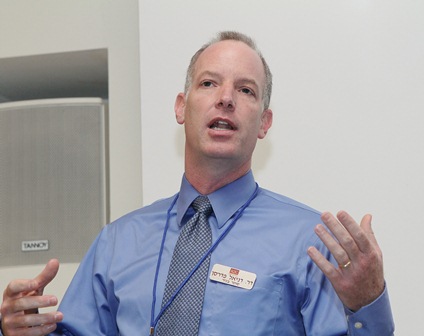
Dr Daniel Federson of the Institute of Quality Control (IQC), a specialist standards training and auditing company, presented on the use of standards including ISO 14000 , ISO 18000 and SA8000 as drivers for sustainability.


My business partner Liad Ortar, presented on the subject of a new tool for measuring sustainability impact of companies using three local rankings.


Iris Rakovitzky, Sustainability Analyst at Beyond Business, presented the results of the Third Israeli Transparency Index, which resulted in a marginal improvement in sustainability transparency by the 100 top publicly traded companies in Israel, at 35%, which we still call FAIL. The Top Ten companies for Transparency were presented with Transparency Index certificates :)


I myself me presented on the state of Sustainability Reporting.


I have uploaded my presentation to Slideshare and you can view it here. My key points relate to navigating the many different dynamics of sustainability reporting today, with the multitude of options and developments in approaches to reporting and changes on the horizon. The big question companies should be facing today is not whether to report but HOW to report.

As this was a sustainability conference, we also ordered special waste bins for organic waste which was then used for compost (after the conference!)


All in all, this was another successful conference which provided inspiration, practical assistance, meeting of minds, meeting of people and hopefully, a platform for further growth and development of sustainability and sustainability reporting awareness and practice in Israel. The only thing we didn't provide was ice cream. Oops. Forgot to put that on the menu. Hmph. 

elaine cohen, CSR consultant, Sustainabilty Reporter, HR Professional, Ice Cream Addict. Author of CSR for HR: A necessary partnership for advancing responsible business practices   Contact me via www.twitter.com/elainecohen  on Twitter or via my business website www.b-yond.biz/en  (BeyondBusiness, an inspired CSR consulting and Sustainability Reporting firm)
Related Posts with Thumbnails