Showing posts with label sustainable business. Show all posts

Monday, July 6, 2020

CSR for HR in the Big Pandemic

Last week I had the honor and pleasure to contribute to the Live Interactions Program of the International Institute for Corporate Social Responsibility (IICSR) and share my thoughts about CSR for HR (human resources). Many thanks to Harsha Mukherjee, IICSR founder,  for her kind invitation. 

Since the publication of my book, CSR for HR: A necessary partnership for advancing responsible business practices in 2010, which now seems like a lifetime ago, I have written and collaborated on several papers, briefings, book chapters and articles on this topic, delivered talks, workshops and facilitated discussions and engaged with HR leaders. Overall, while there has been some shift in approach, I think my mantra: It's time for HR to wake up to CSR is still relevant today. I believe the HR function in general is lagging in its understanding of sustainable business, its willingness to think beyond the traditional HR role and its openness to be a partner in leading sustainable business transformation. A few months back, I gave a talk to a large group of HR professionals in a global company about the connection between HR and the Sustainable Development Goals. For many, it was the very first time they were seeing the broader picture. The arguments are compelling. Companies with progressive HR leadership are undoubtedly, for me, the ones that will be the most agile, resilient and successful over time. 

And then came the Big Pandemic. And with it, an entirely new level of understanding of that well-worn and not entirely true-ringing phrase "our employees are our greatest assets". Now, corporate leaders are using this phrase like they actually mean it, with a new kind of respect in their tone and a degree of compassion in their heart. Through this pandemic, employees have been in focus - both because of their new vulnerability in the workplace and because of their flexibility, creativity and willingness to go the extra mile in a time of crisis. Beyond the essential workers, who in every market have been risking their lives to keep work going, keep people connected, protected and motivated, the rank and file of our global corporations have suddenly become the center... really the center.. not just lip-service to being at the center. I believe a new level of respect for employees by corporate leaders is one of the positive outcomes of COVID-19. I call it a leadership awakening, and if the Human Resources function does not emerge from its comfort zone, embrace this awakening and leverage it to drive a new kind of HR leadership, in a new kind of world, then it will be one of the biggest failures of business today. (I won't dwell here on the Black Lives Matter movement, which is combining with COVID-19 to amplify the need for proactively inclusive business in an inclusive and equitable society. This is of course no less important.) 

Anyway, despite a few technical hitches on the Zoom platform, I delivered an overview of CSR for HR: The COVID-19 Differential, covering the following points:

  • CSR for HR: An overview 
  • The impact of COVID-19 on the management of work 
  • The new challenges for HR leaders managing workplaces in light of the COVID-19 pandemic 
  • The new focus for HR Leaders post COVID-19 
  • The CSR opportunities for HR leaders post COVID-19

Here it is:


Stay well, stay safe, stay optimistic!


elaine cohen, CSR consultant, Sustainability Reporter, HR Professional, Ice Cream Addict. Owner/Manager of Beyond Business Ltdan inspired Sustainability Strategy and Reporting firm having supported 107 client reports to date; author of three books and several chapters on Sustainability Reporting and the Human Resources connection to CSR; frequent chair and speaker at sustainability events and judge in several sustainability awards programs each year. Contact me via Twitter , LinkedIn or via Beyond Business   

Thursday, September 7, 2017

What Singapore stands for. [Hint: ReportingMania]

What does Singapore stand for? Prepare to be enlightened.

S is for Strawberry Cheesecake  - The favorite ice cream flavor of the 2017 Asia Sustainability Reporting Summit creator and host, Mr Rajesh Chhabara. He is making no promises that Strawberry Cheesecake ice cream will be served at the summit, but if it is, it's all for ME😀. 

Rajesh is managing director of CSRWorks International, a leading boutique sustainability consulting firm in Singapore. Deeply passionate about sustainability, Rajesh specializes in sustainability strategy, sustainability reporting, stakeholder engagement, supply chain and training. Rajesh has over 20 years of experience in sustainability in diverse industries across Asia. His sustainability strategies have helped clients win global rankings and recognition. He is an inspiration for us all and is the undisputed leader of #ReportingMania in Singapore and Asia.

I is for Insight - Two full days of #ReportingMania will fuel us with enough insights to last us a full year until the next Asia Sustainability Reporting Summit. Whether your thing is Sustainable Development Goals (SDG) Reporting or regional trends in sustainability reporting regulations or dealing with inconvenient reporting topics, this summit is going to ooze with insights, all there for the taking. If you have been feeling a little short on insights after the summer break, just come along.


N is for No PowerPoint - haha -well, probably ALMOST no PowerPoint. What's wrong with PowerPoint anyway? Well, it's true that sometimes the PowerPoint becomes the conversation instead of supporting the conversation. Too many long decks with colors that blind you and words you can't read with too many long diatribes have characterized conferences since the days of Fred and Wilma. Now, in 2017, the Asia Sustainability Reporting Summit promises, yes, I know it's weird.... conversation. We will be getting past the slides and experiencing authentic voices. Rajesh talks about why this summit is different - including No PowerPoint. "First of all, this Summit is the only regional conference is Asia dedicated to sustainability reporting. The Summit will be addressed by more than 50 speakers, each one of them bringing a wealth of expertise. The Summit’s format is also unconventional. There are no boring monologues or lengthy power point presentations. Each session has been designed to have engaging panel conversations on practical topics seeking active participation from delegates. There are eight powerful masterclasses offering great choices to beginners as well as experienced reporters. In every sense, the Summit is really a unique opportunity for anyone interested in sustainability reporting."


G is for Goal - The goal of Rajesh, our conference wizard, says the 2017 Summit is just the beginning of a great journey to becoming Asia’s most engaging conversation about sustainability reporting. The goal is to make the Asia Sustainability Reporting Summit the most exciting sustainability event of the year. Rajesh promises: "Attendees can look forward to learning from top experts, sharing their own experience, exploring solutions to common challenges, understanding future trends and more importantly networking with their international peers." A worthy goal. Doesn't that make you want to be there to help make it happen? [Hint: of course.] 

A is for Always On - In Singapore, the #ReportingMania conversation will be Always On at the September summit. If you think you can come and idle around for two days, think again. No nodding off in the plenaries. No snappy snoozes in the breaks. No power naps in the restrooms. Snoring will definitely be frowned upon. It's going to be an intensive conversation and it's not going to stop until the last delegate has left (or until the ice cream runs out, whichever is earlier). For all you reporters out there, here's a chance to talk about reporting without someone saying every five minutes: "Who reads reports anyway?" (The last time someone asked me that, I said, "Who doesn't?")


P is for People - The 2017 Asia Sustainability Reporting Summit will be attended by hundreds of delegates from at least 15 countries. That's a lot of people getting excited about #ReportingMania. After all, what is sustainability reporting about if it's not about people? Most of us think a sustainability report is some sort of publication. But it's not only that. It's the culmination of many people performing responsibly and collaborating to tell their story. Reports are more than words on a screen. Reports are about making a difference. By people, for people.

 
O is for Opportunity - No sustainability conversation is complete without opportunity. Opportunity is what the visionary Rajesh Chhabara saw when he thunk up the Asia Summit. His vision in a nutshell: "As a Sustainability Consultant and Trainer, I enjoy helping businesses adopt sustainability strategies to become better and smarter business. Even though sustainability reporting is relatively new to Asian businesses, an increasing number of companies have started producing sustainability reports. As such, sustainability reporting community is rapidly growing in Asia. I thought we should create a regional platform for the reporting community to come together, learn from each other, celebrate their successes and find solutions to common challenges. This is how the Asia Sustainability Reporting Summit was born. The inspiration for creating the Summit also came from the huge success of the Asia Sustainability Reporting Awards or ASRA, another powerful platform we built three years ago to honor and recognize sustainability reporting leaders."


R is for Reporting - Rajesh explains: "The number of companies with no sustainability report is much larger than the companies which produce sustainability reports [in Asia] A very small number of companies chose to report on voluntary basis. In the past 2-3 years, several stock exchanges in Asia have introduced regulations requiring their listed companies to publish annual sustainability reports. Because of this there is a big surge in the number of reports from Asia. Unfortunately, sustainability reporting in Asia is mostly compliance driven, at least for now. However, there is a growing number of high quality reports, as we see every year at the Asia Sustainability Reporting Awards (ASRA). ASRA is now recognised as Asia’s top recognition for sustainability reporting. We are seeing significant increase in the number of entries as well as in the quality of reports. Last year we received nearly 450 entries from over 100 companies from 16 countries. This year’s entries are already open and the trends are looking very strong. I am confident that the number of companies participating this year will be much higher than the last year. I would like to mention that this year’s ASRA have a new category: Asia’s Best SDG Reporting. ASRA continues to be a non-profit project with highly independent judging process."

E is for Experts - Little quiz: How many experts can you cram into a Sustainability Reporting Summit over 2 days? 10? 13? 18.34? Noooooooooooo. 50. That's how many folks will be on stage sharing their expertise with hundreds of delegates, all experts in their own right as well. So 50 plus hundreds is the right answer. But, you knew that, right. That's why you registered. Not registered? Go register.


So, by now, your have realized that S I N G A P O R E stands for #ReportingMania. Come and get some. 🌟

elaine cohen, CSR Consultant, Sustainability Reporter, former HR Professional, Trust Across America 2017 Lifetime Achievement Award honoree, Ice Cream Addict, Author of three totally groundbreaking books on sustainability (see About Me page). Contact me via Twitter (@elainecohen) or via my business website www.b-yond.biz (Beyond Business Ltd, an inspired CSR consulting and Sustainability Reporting firm). Need help writing your first / next Sustainability Report? Contact elaine: info@b-yond.biz 

Elaine will be chairing the Asia Sustainability Reporting Summit in Singapore on 19-20 September 2017 and the edie Conference on Smarter Sustainability Reporting  in London on 27th February 2018

Tuesday, January 26, 2016

Know what CSV really means? Think again.

I had a quick phone call with Janet Voûte last week. I caught her just as she was going into the launch of the 2016 Access to Nutrition Index session at Davos. I guess that's the closest I'll probably get to a WEF session at Davos like ever.


OK, so I wasn't in Davos, I stayed warm.
I was super-grateful that Janet spared me some time as she is one of the most passionate and inspiring speakers around on the making-the-world-better circuit today. She is also really REALLY busy.  Janet shared some insights with me that truly helped me understand the essence of better-world-through-business. Janet Voûte is Nestlé's VP of Global Public Affairs. Want to know what that means? Read on....

But first, a quick reminder of Nestlé's claim to fame: Creating Shared Value (CSV). No, I'm not going to give you the lecture. You probably know what Shared Value is all about by now. But if you don't, stop, grab a cup of Nescafé (see that? PC), and read all about it in Nestlé's last report.


Oops, the full report is 284 pages short. You night need more than one cup. The Summary Report is only ONLY 53 pages and that works well too. The report is entitled "Nestlé in Society: Creating Shared Value and meeting our commitments". That bit about commitments is no less important than the CSV bit. Nestlé has 38 commitments to 2020 that support the CSV direction. Check them out here on Nestlé's CSV website. Against each commitment is a statement of progress and a link to dive deeper. The scale, scope and breadth of these commitments is formidable, especially as they are not only about reducing GHG emissions, water use and salt, fat and sugar in products  ... they are mainly about changing the way consumers consume or the way farmers farm or the way young people get a foot on the career ladder. What's striking about Nestlé's commitments is that most of them really go to the heart of the role of business in society. Which, in a nutshell, is what CSV is all about. It's better-world-through-business .. where business addresses specific societal / social needs in a way that creates value both for the business and for society. Darn. I wasn't going to lecture.

Nestlé's CSV focus is very well defined......
 
 .... and Nestlé has been very consistent over the years in driving its prime agendas forward. But I promised to tell you what VP Global Public Affairs means. Perhaps it's better to let Janet explain:

What does Global Public Affairs mean on a day-to-day basis?
Janet: What I spend my days on is our CSV agenda and all the many aspects of that. I have the privilege to sit on the Nestlé In Society board – that’s an internal management board of our entire societal agenda, chaired by our CEO, which meets three or four times a year. I also spend time as Chair of the Nestlé CSV Council which is an external advisory group made up of 12 thought-leaders from around the world in strategy and sustainability matters such as nutrition, water, agriculture and rural development. I also organize our CSV Forum and stakeholder convenings. Obviously, around this time of year, I am also involved in the development of our report suite and effective communications of CSV. I have a particular background in the health field so I also work on our Nutrition Health and Wellness strategy.

Yes, you did read that right. Stakeholder convenings. Somehow that sounds much more considered than stakeholder meetings or stakeholder dialogue, though I suppose it's pretty much that. However, Nestlé does this quite spectacularly. But before we convene about convenings, you first need to know about the CSV Global Forum. This is an annual public debate held in different places around the globe, bringing together around 200 experts for a full day to discuss the role of business in society and key topical themes. It's live-streamed and prolifically tweeted. You can read the summary of the 2014 event here.  (Don't worry, no more than one cup). The CSV Global Forum provides inspiration and direction for the stakeholder convenings.

Please tell me about stakeholder convenings.
Janet: Twice a year, in addition to our public engagement processes, we hold private stakeholder convenings covering the same topics that we discussed in our public stakeholder dialogue events under the CSV Forum. These private convening events for around 60 - 70 people including academics, NGO's and members of the investor community enable an open discussion about what we are doing and what they like and what they don't like. The convenings are held under Chatham House Rules (we just completed one in Washington D.C.) and the conversations are enriching for our business leaders. The last time, our CEO spent nine hours listening and responding. This platform provides authentic insight into what’s expected of us as a company. It also helps our stakeholders gain new insight so I hope it's mutually beneficial. The think-tank SustainAbility helps us structure the process. The output of these discussions feed our materiality assessment. We also publish the recommendations in our CSV report.


The investment in truly understanding what stakeholders are saying in so many different meetings, convenings, gatherings and panels (Nestlé also has a Nestlé Nutrition Council - an independent advisory panel made up of international nutrition scientists) is a far cry from the online questionnaires or consultant-led interviews with anonymous stakeholders which seems to satisfy many companies. This is real face-time. It's meaningful, impactful and robust as a source of guidance for Nestlé's evolving role in society. One of the tangible outcomes is Nestlé's materiality matrix.


Does all this chatter really have an impact on the way Nestlé does things?
Janet:  Oh yes! It really does. For example, our use of the term zero in our water program may well have come from our interaction with John Elkington on the Nestlé CSV Council who made that term synonymous with the sustainable development agenda in his book The Zeronauts. We have zero water dairy factories. While we might have gotten to this ourselves, it’s not a given that we would have developed our ambition to reach this far. Similarly, for example, Sasha Zehnder, the Scientific Director of the Alberta Water Research Institute in Edmonton, guides us in the fact that water is both an emotional and a rational discussion, and all of our nutrition experts on the CSV Council encourage us to engage more with stakeholders and review our commitments. Our CEO listens, we listen, and this changes how we evolve. We are now planning our seventh CSV Forum to take place in Abidjan in the Ivory Coast in June this year. This Forum will continue to look at the changing role of business in society especially in the light of the new Sustainable Development Goals.


Cero means Zero in Mexico. Just sayin'....

What’s hot on the CSV agenda today?
Janet: The CSV agenda is always dynamic. Nutrition is always on the agenda with both the overweight and underweight double burden of malnutrition. That will always be part of Nestlé corporate strategy. Also, clearly the water and environmental sustainability agendas will continue to be central. And all the work with farmers and rural development. Our Chairman is here at Davos with a new 2030 Water Resources Group which he helped establish. This area will require focus for years to come. What’s new is perhaps the increasing interest of investors beyond SRI and ESG investors. I am seeing new frontiers as the conversation starts to penetrate into the mainstream. Mainstream investors are starting to understand that it’s about why the business does well – CSV as essential to business success through improved access to capital, access to labor, license to operate and brand building. The other topic area that's hot right now is the consumer/millennial side of the equation.

Over and under nutrition is Nestlé’s top material issue. Where do you believe you have made the most significant progress in these areas in the past few years?
Janet: In terms of the double burden of malnutrition, we are all massively concerned with increasing rates of obesity, and recognize that national health systems cannot manage this. That’s a joint, mutual concern while at the same time you still have populations that are undernourished, malnourished and micro-nutrient deficient. Nestlé has done many things in this area. We have done some of the classic things like reducing salt, fat and sugar and added whole grains and vegetables, but we have also innovated in a series of areas like portion guidance. We are starting to tell consumers in simpler terms how much is the right amount to eat to help them make better decisions. For example, in the U.S., we have a frozen pizza business and we have portion guidance that shows that a big guy can have two pieces and a kid can have one and you should eat it with salad! 


Janet: We are also doing a great deal of research for the future of nutrition to make step changes such as addressing sodium levels to retain taste but dramatically lower sodium content. To further our research, we have two relatively new business areas in the past 5 years: Nestle Health Science and Nestle Skin Health. Going beyond the food and beverage business and investing in the future of nutrition and health is how we are evolving our corporate strategy while staying true to our CSV core. Science looks for nutritional solutions to specific conditions – targeted nutrition and personalized nutrition are the next level - food, health, skin care - it's all linked by the science of nutrition. It’s a big agenda and I am proud of the company for the progress we have made - it’s not over! I am  also happy we improved our score to become number 2 in the  2016 Access to Nutrition Index which is a very rigorous benchmark of food and nutrition companies. 

Nestle 2016 ATN rank
********

It will be a great honor for me personally to host Janet Voûte at our upcoming Sustainability Reporting Conference in February. Janet is a wealth of experience, knowledge and insight, and has a tangible passion that will energize our audience. Of course, if you haven't booked your place yet, better hurry! You wouldn't want us to run out of space, now, would you? Check with me for a discount (yay!).


elaine cohen, CSR consultant, Sustainability Reporter, HR Professional, Ice Cream Addict. Author of Understanding G4: the Concise Guide to Next Generation Sustainability Reporting  AND  Sustainability Reporting for SMEs: Competitive Advantage Through Transparency AND CSR for HR: A necessary partnership for advancing responsible business practices . Contact me via Twitter (@elainecohen)  or via my business website www.b-yond.biz   (Beyond Business Ltd, an inspired CSR consulting and Sustainability Reporting firm).  Need help writing your first / next Sustainability Report? Contact elaine: info@b-yond.biz  

Monday, January 18, 2016

How will you simplify your supply chain this year?

Here's a little one-question one-answer quiz.

Question: 
What's the second best thing you can do to mitigate supply chain risk in 2016? 

Answer: (please select one)
a) Attend the Sedex 2016 conference
b) Attend the Sedex 2016 conference
c) Attend the Sedex 2016 conference
d) Attend the Sedex 2016 conference

Whether you selected answer a) b) c) or d), read on. Learn more about why the Sedex Conference in March in London in 2016 should be part of your schedule.  


I grew up in the supply chain. In my formative years as a young manager with Procter and Gamble, I was responsible for logistics in Scotland and Northern Ireland in my very first management role, and then, over eight years until I decided to move on to pastures new, I took on successively diverse and challenging roles across different aspects of the supply chain in Europe including purchasing, customer service, distribution center management and more. And today, working with clients on strategy and reporting, I always feel at home discussing the opportunities (and risks) relating to ethical and sustainable supply. In that context, Sedex often crops up as one of the most influential players in the field of sustainable sourcing and responsible supply chain practice. I am looking forward to attending the 2016 conference, not only because I'll have the chance to speak (you all know how I love to talk), but mainly because I have the feeling that I am going to learn 
a lot.

Sedex is a not for profit membership organisation dedicated to driving improvements in ethical and responsible business practices in global supply chains. As the largest collaborative platform for sharing ethical supply chain data, Sedex is an innovative and effective supply chain management solution, helping companies to reduce risk, protect their reputation and improve supply chain practices. 

I could write reams about the vital importance of ethical supply chain management and the increasing risk as businesses become more global in scope and more complex in scale. It's also a gobbler-upper of resources. Monitoring, audits, training, communications, evaluations, assessments in a context of increasingly strict regulatory requirements means that both customers and suppliers must invest significant resources to stay not only cost-effective but also low-risk. At the same time, the supply chain, if you treat it right, can be a fabulous source of innovation and creativity, enabling business expansion and growth. And of course, no Sustainability Report is complete without critical supply chain disclosures. It seems that Sedex is in the right place at the right time. And by attending the Sedex 2016 Conference (#Sedex16), you will be too! Check out the agenda here.  

I posed a few questions to the Sedex CEO, Jonathan Ivelaw-Chapman, about supply chain sustainability and the conference. Check out his insights: 

What's the most important aspect of your role at Sedex? What's most challenging and what's most satisfying? 

Jonathan: Since joining Sedex, what has struck me is our people and the passion they bring to the organisation. For me, it’s our values and our people that are the most important aspect at Sedex. The most satisfying part of what I am doing is seeing our employees engage in future-thinking in fresh and innovative ways. They are all here because they care and are passionate, and the talent and energy we have seems endless. This is wonderful to observe and participate in. 

Coming from the technology industry, where for nearly 30 years, hype, language and behaviors were all about self-justification and increased investment, I now sense an exit to the “hype” that we have all experienced. I want to help avoid any similarities to the IT industry, by bringing clarity and affordability into the sustainability industry. The challenge for Sedex is to help our industry and membership navigate in an increasingly complex sustainability world. We will do this by simplifying our language, facilitating opportunities to work collaboratively, and giving our members an industry roadmap, with a vision of the way responsible sourcing can work. 

The Sedex Conference 2016 theme runs under the banner of simplification. Everyone seems to talk about the sustainability landscape becoming increasingly complex! How realistic is simplification?

Jonathan: The business and sustainability landscape is rapidly changing. From natural resource scarcity to human rights, child labour to an evolving regulatory landscape, our industry is facing a range of challenges. With all these new topics coming up, sustainability is becoming a complicated space with new initiatives, frameworks, certifications, and schemes, creating silos in industries, countries, topic areas themselves.

Sedex is already looking at simplifying supply chains and recognising the interconnectivities between different issues such as bribery and health and safety and whether there could be more effective ways for companies and their suppliers to manage these issues as one as opposed to treating them in silos. 

There is no need to re-invent the wheel but rather try to scale up – pick what’s relevant to you and collaborate with other stakeholders. We might not have all the right answers just yet, but we are getting there. The conference will provide a great forum to discuss and address the challenges and hear from the industry leaders on how they are going about simplifying the challenging issues and approach to tackling them. 

What's going to be different about the SEDEX Conference 2016? What highlights should we look out for? 

Jonathan: This will be our largest conference so far, bringing together around 1,000 leaders in responsible sourcing for two days of discussions. The conference will be live-streamed and for the first time, we will also have live interviews with conference speakers straight from the conference hall. The conference agenda will cover the most relevant topics for supply chain sustainability – from modern slavery legislation, how organisations can quantify, value, and improve their impact on society, to best practice in agricultural sustainability measurement and reporting tools and resources and much more. 

We have an exciting line up of speakers – from multinational companies such as Kellogg and Mars, to organisations such as International Trade Centre and Thomson Reuters across plenary sessions, master-classes, workshops and spotlight talks. 

For the first time ever we will also host the VIP Networking Dinner event at the Barbican’s tropical plant conservatory in the heart of the City of London. Our conference delegates often ask for more opportunities to network and this dinner, designed for just 150 guests, will provide an exclusive opportunity to connect with industry experts and discuss hot sustainability topics. We are delighted to have John Morrison, Executive Director of the Institute for Human Rights and Business, speaking during the dinner. As a well-known and influential voice on business and human rights, and a highly engaging and knowledgeable speaker, John's speech will be a real highlight of the evening.

***********

And now another little one-question one-answer quiz:

Question: 
What's the first best thing you can do to mitigate supply chain risk in 2016? 

Answer: (please select one)
a) Attend the Sedex 2016 conference
b) Attend the Sedex 2016 conference
c) Attend the Sedex 2016 conference
d) Attend the Sedex 2016 conference 

Look forward to seeing you there!
Drop me a note if you'd like a 50% discount on the standard ticket price on registration. Who wouldn't?


elaine cohen, CSR consultant, Sustainability Reporter, HR Professional, Ice Cream Addict. Author of Understanding G4: the Concise Guide to Next Generation Sustainability Reporting  AND  Sustainability Reporting for SMEs: Competitive Advantage Through Transparency AND CSR for HR: A necessary partnership for advancing responsible business practices . Contact me via Twitter (@elainecohen)  or via my business website www.b-yond.biz   (Beyond Business Ltd, an inspired CSR consulting and Sustainability Reporting firm).  Need help writing your first / next Sustainability Report? Contact elaine: info@b-yond.biz  

Sunday, April 5, 2015

Ajinomoto: Courageous reporting practice

I have always admired the Ajinomoto company of Japan, and back in 2010, I published a review of Ajinomoto's 2009 report. This time, five years later, I returned to Ajinomoto, at the company's request, to review the most recent 2014 Sustainability Report covering fiscal 2013 activities and prepare a commentary for publication. And it was a great pleasure to do so. (I have fond memories of visiting the Ajinomoto offices and factories in Tokyo back in the 1990s at a time when I had never even heard the terms Corporate Social Responsibility and Sustainability. The strong positive impressions of the way Ajinomoto works and warm hospitality of the totally wonderful people I met there remain with me today).  

Ajinomoto is no stranger to Sustainability Reporting. Ajinomoto started publishing an annual Environmental Report in 2001 and then in 2004, published a first CSR Report, demonstrating a commitment to a broader concept of CSR, beyond the scope of environmental stewardship alone. Through 2004 - 2011, Ajinomoto published two reports in tandem, until in 2012, the group made the transition to publishing one Sustainability Report encompassing the full spectrum of disclosures. The 2014 Sustainability Report is the third full Sustainability Report. 


This current report tells a strong story of Ajinomoto's contribution to healthy eating and healthy living. Ajinomoto has a well-defined approach to sustainability that has two broad elements: sustainable contribution and responsible behavior.


My commentary is on page 141:


Here it is in full:

"
In today’s world, it is not enough to simply be a food or food-ingredient producer. Leading companies view their contribution to society more holistically by identifying and managing the impacts they generate throughout their entire value chain. Such companies, for example, strive to educate consumers and help them adopt healthier and more sustainable lifestyles. In addition, leading companies aspire to conduct their business in an ethical and responsible way. Ajinomoto’s 2014 Sustainability Report addresses both of these aspects of sustainable business. The first part of the report represents Ajinomoto’s three broad areas of contribution: promoting healthy living, conserving food resources and advancing global sustainability. The second part of the report describes Ajinomoto’s responsible practices using the ISO26000 as a framework approach. 

Overall, this is a comprehensive report that covers all the issues we might expect a food company to address, including nutrition and lifestyle, the use of technology and science to improve resource efficiency, sustainable agriculture and land-use, governance, compliance, human rights and employee engagement, health and safety. In all areas, Ajinomoto demonstrates a strong understanding of what’s at stake and what, as a food company, it can and should contribute. Evidence of stakeholder dialogue adds credibility to Ajinomoto’s selection of areas where the company can add value. 

Some of Ajinomoto’s activities are particularly impressive. The company’s investment in externally assured lifecycle carbon footprinting across seven key seasoning ingredients demonstrates advanced commitment to understanding and improving resource efficiency throughout the value chain. Ajinomoto’s approach to circular resource use – using by-products of amino-acid production as fertilizer for crop sources for amino-acids - is an example of sustainable practice. Demonstrating the environmental benefits of amino-acids in feed for livestock supports sustainable agriculture. Innovations in sustainable packaging, including the use of biomass plastic, are leading edge. The extensive engagements in a range of countries to improve nutrition in the Ajinomoto International Cooperation Network for Nutrition and Health (AIN) program show a real commitment to adding value to society. 

One of the challenges of sustainable business is measuring the impacts of company activities and their effects on people, society and the environment. It is not enough to focus on, and report, what you are doing. The real measure of progress is what changes as a result of what you do. In this context, I believe Ajinomoto could go further in identifying and measuring the outcomes of its activities and reporting these outcomes to stakeholders. For example, Ajinomoto relates stories of how the company provides new food alternatives for consumers in Brazil and Pakistan and advances material and infant nutrition in Ghana. These initiatives are commendable but the real question is: how are they actually improving lives and to what extent? Reporting evidence of change as a result of these initiatives would help us appreciate Ajinomoto’s efforts and understand the true value of the company’s contribution to improving healthy lifestyles. 

Similarly, Ajinomoto’s work in sustainable sourcing of skipjack tuna, palm oil, paper and coffee beans is described in the report and Ajinomoto’s initiatives here are impressive. However, reporting actual consumption of these resources and the percentage of each that is sourced sustainably would help clarify the extent of Ajinomoto’s progress. 

While Ajinomoto provides a comprehensive report, it is long. This is partly due to the inclusion of extensive background narrative for the issues Ajinomoto addresses in the report. An understanding of relevant context is important, but it is performance and outcomes that stakeholders need to understand. In future reporting, I believe this narrative could be significantly reduced in a much shorter report that focuses on what matters. Similarly, the report describes policies and approaches in detail, sometimes excessively, without following through on performance. For example, Ajinomoto notes an intention to "promote more women to management positions". Women employees account for just 27% of Ajinomoto’s global workforce and 15% of managers. For a company whose products are largely targeted at women, there is an opportunity to reinforce Ajinomoto’s commitment to women (and therefore society as a whole) by outlining clear plans of action with goals and targets. Another example relates to employee safety. Ajinomoto’s safety data shows that safety of workers outside Japan is far less positive than in Japan. With 65% of Ajinomoto’s permanent workforce outside Japan, reporting a specific plan to address safety at a global level would seem imperative. I would recommend Ajinomoto to consider this in its next report. 

Alongside this, few truly long-term aspirations are presented. Sustainable business goes beyond a three year management plan, and sustainable change takes longer to achieve, especially in a company as dynamic and complex as Ajinomoto. I recommend Ajinomoto to develop a core set of targets to 2020 that can be used to drive, measure and report future progress. Ajinomoto has been around for 105 years. Ajinomoto’s commitment to sustainable business and transparency gives me confidence that the company will be around for at least another 105 years. Therefore, a longer planning and target-setting horizon would be welcome.
"

The practice of asking independent experts from around the world to review and comment on a Sustainability Report is quite widespread among Asian reporters. While an external commentary is not exactly "engagement" in the fullest sense of the word (and does not replace ongoing stakeholder engagement), there is something rather courageous about asking independent experts to review and comment on a Sustainability Report, and then publishing their independent commentaries in full. I can confirm that Ajinomoto published my comments with no editing, and did not try to influence me in any way about what to write or what to focus on. The only limitation I was given was a word-count. 

I was also happy to read three additional expert commentaries in the same 2014 Ajinomoto report.
  • Deborah Leipziger, Professor at Hult International Business School and a Senior Fellow at the Lewis Institute at Babson College.
  • Mark Feldman, Managing Director of Cause Consulting.
  • Dr. Wong Lai Yong, Founder of First Penguin and social responsibility and human resources development consultant.

All three experts provided a truly interesting and diverse range of insights that are well worth reading. Ajinomoto's openness in requesting and publishing such commentaries is to be admired, though, one hopes, that these will not remain at the level of words on pages. Each expert articulated different pieces of very practical advice to assist Ajinomoto in its ongoing reporting journey. The hope is that this advice and guidance will be carefully analyzed within the Ajinomoto reporting team and company management, and that, where relevant, suggestions may be adopted to help make Ajinomoto's next report even more relevant and useful to stakeholders.

I look forward to seeing the next Ajinomoto Sustainability Report. In the meantime, Ajinomoto's current report provides, in the words of Dr Wong Lai Yong, "a strong example that Ajinomoto is willing to walk the talk." 


elaine cohen, CSR consultant, Sustainability Reporter, HR Professional, Ice Cream Addict. Author of Understanding G4: the Concise Guide to Next Generation Sustainability Reporting  AND  Sustainability Reporting for SMEs: Competitive Advantage Through Transparency AND CSR for HR: A necessary partnership for advancing responsible business practices . Contact me via Twitter (@elainecohen)  or via my business website www.b-yond.biz   (Beyond Business Ltd, an inspired CSR consulting and Sustainability Reporting firm).  Need help writing YOUR Sustainability Report? Contact elaine: info@b-yond.biz   

Friday, January 30, 2015

What does trust mean to you?


This week saw the publication of the 2015 Top 100 Thought Leaders in Trust. You can see who made the list this year, including 15 Lifetime Achievement Award winners, in the free download of the Winter 2015 magazine issue. I was honored once again to be selected as one of the Top 100, and humbled to be in the company of those I feel are much more deserving of this recognition. This is the 5th year that Trust Across America - Trust Around the World - under the visionary leadership of Barbara Brooks Kimmel - has recognized professionals from business, academia, nonprofits and consulting whose work is elevating organizational trust. The leaders were selected by a distinguished panel of judges  - big names in responsible business - and you can read about them too in the Trust! Magazine Winter Issue. 

The theme of trust is so central to everything we do in sustainability and both a driver and an outcome of sustainable behavior. Several of the lifetime honorees took time to reflect on what trust means to them, and much of what they said resonated strongly with me. For example:

Patricia Aburdene: "In the business world, trust literally transmutes into success and profitability."

Steven M.R. Covey: "Trust underlies and affects the quality of every relationship, every communication, every work project, every business venture, and every effort in which we are engaged."

Jed Emerson: "Confidence in our collaborations with others is the foundation of successful organizations, and the best collaborations are always fundamentally a question of creating a trusting relationship."

Leslie Gaines-Ross:  "Trust is the bedrock of relationships."

Mary Gentile: "Trust means integrity – acting in accordance with our words and commitments—and making sure those words and commitments are worthy of this consistency."

Charles H. Green: "Trust-based organizations encourage and enable the art of trusting and the virtues of trustworthiness in all the personal relationships they touch. In so doing, they also increase the social and financial value of the organization."

Jim Kouzes: "Trust rules your brand image."

Linda Locke: "Trust, and reputation are about how you make people feel. We want to conduct business, and have relationships with people and organizations we respect and hold in high esteem. Trust is a central strategy for business growth in a reputation economy."

Edward Marshall: "We yearn for relationships and organizations that operate with integrity, honor, transparency, and grace. It is possible."

There is no sustainability without trust. There is no business success without trust. Often imperceptibly, trust builds stronger organizations. This got me thinking about the role of sustainability reporting in helping to build and enhance trust in a range of ways. Whose Sustainability Report do you trust and why? And what affects the trust we place, or do not place, in sustainability reporting. This is the topic of a future post (coming soon!). 

In the meantime, each of the 100 Top Thought Leaders in Trust offers inspiration that we can create a business environment that has trust at its core. Barbara Kimmel and Trust Across America is committed to helping us do just that, and the annual honoring of thought leaders, the suite of books published in the Trust Inc. series, the frequent blogs on trust and related matters and the F.A.C.T.S. framework for trustworthy business behavior are all making their impact felt.  

Congratulations to all the 2015 honorees and especially the Lifetime Achievement Award winners!


elaine cohen, CSR consultant, Sustainability Reporter, HR Professional, Ice Cream Addict. Author of Understanding G4: the Concise Guide to Next Generation Sustainability Reporting  AND  Sustainability Reporting for SMEs: Competitive Advantage Through Transparency AND CSR for HR: A necessary partnership for advancing responsible business practices . Contact me via Twitter (@elainecohen)  or via my business website www.b-yond.biz   (Beyond Business Ltd, an inspired CSR consulting and Sustainability Reporting firm).    

Thursday, December 11, 2014

Belgium: 16 first-time G4 reports

How easy is it to start your reporting journey with a G4 report? If you have never reported ever ever in the past, going straight to G4 could be a good approach, enabling you to cut to the chase and avoid the trial and error of ten to twenty years of reporting experience of thousands of companies. Going straight to G4 could enable first-time reporters to deliver focused reports, unburdened by prior reporting history. On the other hand, maybe G4 is more challenging than just another join-the-dots exercise and first-timers might not really get the value out of what it all really means. I decided to try and find out.


The GRI Sustainability Disclosure Database at around mid-December shows 92 first-time reporters who used G4 for their first report - 11 published in 2013 and 81 published in 2014. These first-time reporters came from 30 countries with Belgium in winning position way out in front with 16 first-time reports in accordance with G4. The U.S. delivered 8 first-time G4 reports, Columbia and Germany produced 6, and Spain, 5. All other countries produced 4 or fewer first-time reporters using G4.

In terms of sectors, there is a broad range and surprisingly, the non-profit sector delivered the highest number of first-time G4 reports with 8, but the construction sector delivered 7 reports while the construction materials sector delivered 5, so that's 12 reports with something to do with construction. The energy and real estate sectors each delivered 6 reports, and all the rest, 4 or fewer.

Naturally, I wondered how they all are doing it. Join me for the tour.


I thought we would start with Belgium, seeing that G4 for first-time reports appears at first glance to have become popular to the level of cult. 16 out of the 23 G4 reports published in Belgium in 2014 were first-timers. But only because someone had a big vision with cash support behind it. The visionary, as far as I can tell, was the European Social Fund (ESF) with an aim to drive the creation of sector "CSR passports" that would define the specific CSR challenges and issues facing companies in Belgium in each sector, and select 15 - 20 performance indicators especially relevant to each sector. Grants were awarded to consulting firms to work with sector organizations and individual companies to develop this set of issues and refine the CSR Passportד. The work involved companies in the relevant sectors publishing first Sustainability Reports using G4 guidelines. The horticulture and construction sectors came first, and several others are planned to follow. There are also some non-profit organizations that were funded as well. Sort of a Belgian SASB -style initiative, and a really great one at that. It's a very practical approach - develop a deeper understanding of what's important while actually delivering report outputs. Maybe that's a better way than just defining standards - maybe the standards should be defined through the reporting process and not separate from it. But that's another discussion. What I have stumbled on, quite by chance, in Belgium, is a really fabulous initiative that has brought many small companies onto the sustainability and reporting map. Of the 16 first time G4 reporters in Belgium, 15 appear to have been funded through European Social Fund (ESF). I have split them in to three sections for the purpose of this review.

First off, we have 7 out of the 16 first-timer Belgian reports that are simple, no-frills self-declared G4 core reports. You can find them on the GRI Sustainability Disclosure Database. All reports were supported by a Belgian consultancy called Kreski in a fully-funded project of EDUplus, the Belgian agency of European Social Fund (ESF) within the context of the CSR Passport project. All reports are prepared in word format, and follow the G4 guidelines in the most basic way, providing responses to the disclosure requirements and providing the data as required. Material Aspects, for example, are not separately listed - the way to know what's material is to check what's reported in the GRI Content Index. While all these reports are rather elementary, and possibly-don't-or-just-about meet the requirements for G4 reports, the idea is great and it's inspiring to see the willingness of these small companies to participate in this project. Some reports are more detailed than others, but all follow a simple flow and deliver a minimal but credible and admirable level of transparency for a group of mainly small companies, most of which are still owned by their founders or families of the founders. Of course, as it was fully-funded, it didn't cost them money... but it did require time, effort, thought and a willingness to disclose. I hope this process was energizing for the companies involved and that reporting won't be just a flash in the pan. Now the basis is created, perhaps the second report may be easier to develop.

The 7 reports in this bunch are from companies in the agriculture, textiles and construction sectors:


Alsico Group: Alsico is a third-generation run workwear clothing company founded in 1934. Currently it employees around 4,000 people and has a turnover of around Euro 170 million. This is a 37 page report covering 14 performance indicators.

Berry Alloc: Berry Alloc is a floor and wall covering company making laminates, parquets, vinyl planks and wall panels. The company is part of the Beaulieu International Group and has around 134 employees with plants in 3 countries. This is a 46 page report covering 18 performance indicators.

Fruitbedrijf Cocquyt: This is a fourth-generation run family-owned fruit producng firm founded in the 1920s, specializing in apples, pears and cherries. Thee are 10 permanent employees, supplemented by up to 70 seasonal workers. This is a 6 page report covering 17 performance indicators.

Decospan: Decospan  a wood veneer processing company with 122 employees, family owned, founded in 1978. The company is headquartered in Belgium and has subsidiaries in 8 countries in Europe. This is a 51 page report covering 23 performance indicators and a little more substantial in terms of scope and narrative that the others in this bunch.

Elanco:  Elanco is a family firm of around 70 employees founded in 1948. The company makes work clothing, specializing in uniform shirts and blouses. This is a 6 page report covering 16 performance indicators.

TomatoMasters: This is a tomato grower, the third largest in Flanders, privately owned, founded in 2012 based on a tradition of tomato growing since 1981.  Tomato Masters has 30 employees, supplemented by seasonal workers. This is a 23 page report covering 21 performance indicators.

Van Heurck NV: A private company, manufacturer of protective workwear, founded in 1920, witha 2013 turnover of Ruro 4 million, and 307 employees (of which 91% are women). This is a 14 page report covering 25 performance indicators.

While these reports are all commendable, and possibly a good way to jump-start a reporting process, the proof of their value will be in the second reports of these companies, and potentially a visible shift in approach and integration of sustainability themes into these businesses. At this point, it looks like we have reports, but not transformation. However, so far, an impressive initiative.

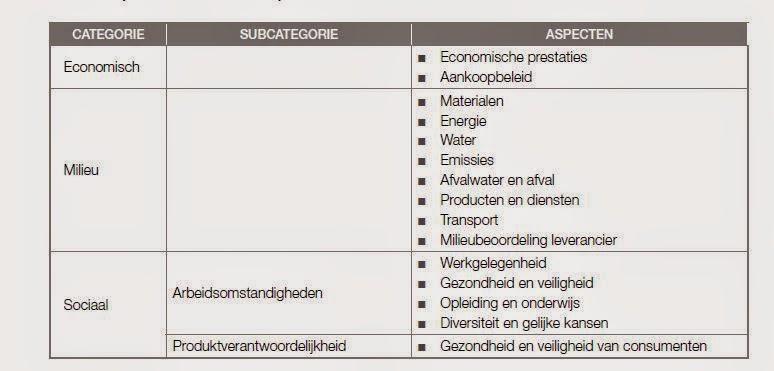
Next, in addition to the two construction sector reports already mentioned above, we have 5 reports from the construction sector that bring us to a total of 12 of the 16 first-time G4 reports from Belgium. These reports are generally offer more depth and evidence of a deeper connection to sustainability practice. These reports were supported by the Belgian Federation of the Concrete Industry as a key sector influencer and player, and all reports describe stakeholder consultation with other association players in the concrete industry that has led to a definition of material issues for each.  While each report is different, they all tend to follow the G4 guidelines in an orderly way, focusing primarily on direct economic, social and environmental impacts. This is good basic reporting and it is inspiring to see such a range of fairly small companies get engaged with sustainability reporting, each in its own way within a specific sector and project context. These five construction sector CSR Passport participants are:


Dak Plus: This is a family run firm with six employees, engaged in providing roofing solutions.  This is a 62 page report, but the reason it is so long is the inclusion of around 30 pages of detailed finances including budget lines for three years. Total - radical - transparency, but maybe just a little too total. This report was was partially assured (three indicators). 12 performance indicators support the stated material issues which are defined in a materiality matrix after discussion with external stakeholders.


This looks like a nice report - my Dutch is not so great so I didn't make the effort to read it all - but it looks as though it would be quite interesting to read as it seems that this company gets what sustainability is all about. It's an impressive report for such a small outfit. It's also pleasantly designed. The plan is to report every 2 years. Let's hope Dak Plus manages to achieve this.

Kerkstoel Group: This is a family-owned concern in the construction industry which brings together a number of companies under one holding, with a total of 131 employees. The report is 36 pages and states 15 material issues and reports against 25 performance indicators.


O Beton: O Beton is a privately owned company founded in 2012 and run by its two partners. O Beton employs 16 people. This is a short G4 report of 29 well-spaced pages, defining 13 material Aspects and reporting against 19 performance indicators.

Stradus Infra: This is a manufacturer of precast concrete and customized products for public places. The company employs 271 people and is part of the international diversified building materials group, CRH.  A sustainability approach seems to be reasonably well-embedded at Stradus Infra. For example, by the end of 2014 the company plans to manufacture all its products using self-generated renewable wind and solar energy. This is a solid report of 55 pages, defining 14 material Aspects and reporting against 26 performance indicators.


By the way, I love the title of this report - even if my Dutch is not that great, it has a certain ring to it.


Wycor nv: Wycor is a maker of joinery and building finishing materials for renovation, and internal and exterior finishing. The company is a limited company owned by private investors, and employs 220 people. This is a word-format report of 64 pages, defining 16 material Aspects (of which 6 are most material) and reporting against 16 performance indicators of which two are from the Construction Sector Supplement. Three performance indicator disclosures were externally assured. A materiality matrix is presented:


I didn't take the time here to see if I could guess from these reports what might be the content of the Belgian Construction Sector CSR Passport, but with such a great collection of disclosures and dialogue within the sector, I am sure this will make for a great addition to the body of sustainability knowledge and practice.

Three more ESF-supported first-time G4 reporters from Belgium in 2014 are from the non-profit sector. These are:

Amival: Amival (Labor for the disabled) was founded in 1964 as a non-profit organization with an aim to help create meaningful and rewarding employment for people with disabilities. The organization maintains several workshops where employees with disabilities can work and deliver a useful output for society while gaining skills and self-respect. The work centers around packaging, assembly and dis-assembly of electronic products, preparing promotional items and much more. The company - a "protected workplace" - has 70 employees that support the provision of work for 400 employees with disabilities. This is an 82 page report, identifying 14 material Aspects and reporting against 16 G4 performance indicators and one other called "extra" as a self-defined performance metric. A fabulous organization and a nicely laid out report.

Bewel: Bewel is another non-profit organization that supports the creation of job opportunities for people with disabilities. The work here includes silkscreen printing, textile conditioning, packaging work, cleanroom work for medical supplies and gardening and landscape maintenance work. Bewel has 10 centers in the Limburg area of Belgium, with an employee headcount of more than 1,900, making Bewel one of the largest employees in the Limburg area. This is a 51 page report, identifying 20 material Aspects and reporting against 29 G4 performance indicators and two others called "extra" as self-defined performance metrics. This looks like a well written report with some super photos of Bewel employees.

DeWinning: De Winning is the umbrella organization for 4 non-profit organizations that share a mission to support the professional integration of individuals who encounter difficulties in entering the labor market. The group provides employment projects including vocational training, social enterprise experience and career guidance and support. Different practical activities and training programs are held at each of the four centers in this association. The report covers all four operations and is 55 pages long, identifying 16 material Aspects and reporting against 23 G4 performance indicators and two others called "extra" as self-defined performance metrics.

Finally, number 16 in our first-time G4 reporters from Belgium is from an academic institution.


Ghent University: This is a first-time G4 report of 74 pages and it seems to be well done. It starts off with an assertion that I am not sure I entirely agree with but that's probably a good subject for debate.


No doubt that educational institutions have an important role to play and its good to see UGent taking a lead role. With 41,000 students in 2013, and around 9,000 employees, this institution has a broad reach. UGent reports against 48 performance indicators. The list of material issues and the materiality process is described in an external document which I did not attempt to read (language challenges again), but there does seem to have been evidence of process in determining what to report.

Whew! After all that, my knowledge of the Dutch language has certainly improved, and I have also had lots of fun checking out how so many Belgian companies can be energized into taking part in what I can only assume was a very rewarding process. Well done to Belgium and its first-time G4 reporting leadership.

Now we are off to another country... guess where  ....


 Check it out in an upcoming post :)

elaine cohen, CSR consultant, Sustainability Reporter, HR Professional, Ice Cream Addict. Author of Understanding G4: the Concise guide to Next Generation Sustainability Reporting  AND  Sustainability Reporting for SMEs: Competitive Advantage Through Transparency AND CSR for HR: A necessary partnership for advancing responsible business practices . Contact me via Twitter (@elainecohen)  or via my business website www.b-yond.biz   (Beyond Business Ltd, an inspired CSR consulting and Sustainability Reporting firm).  Check out our G4 Report Expert Analysis Service - for published G4 reports or pre-publication - write to Elaine at info@b-yond.biz to help make your G4 reporting  even better.
Related Posts with Thumbnails